

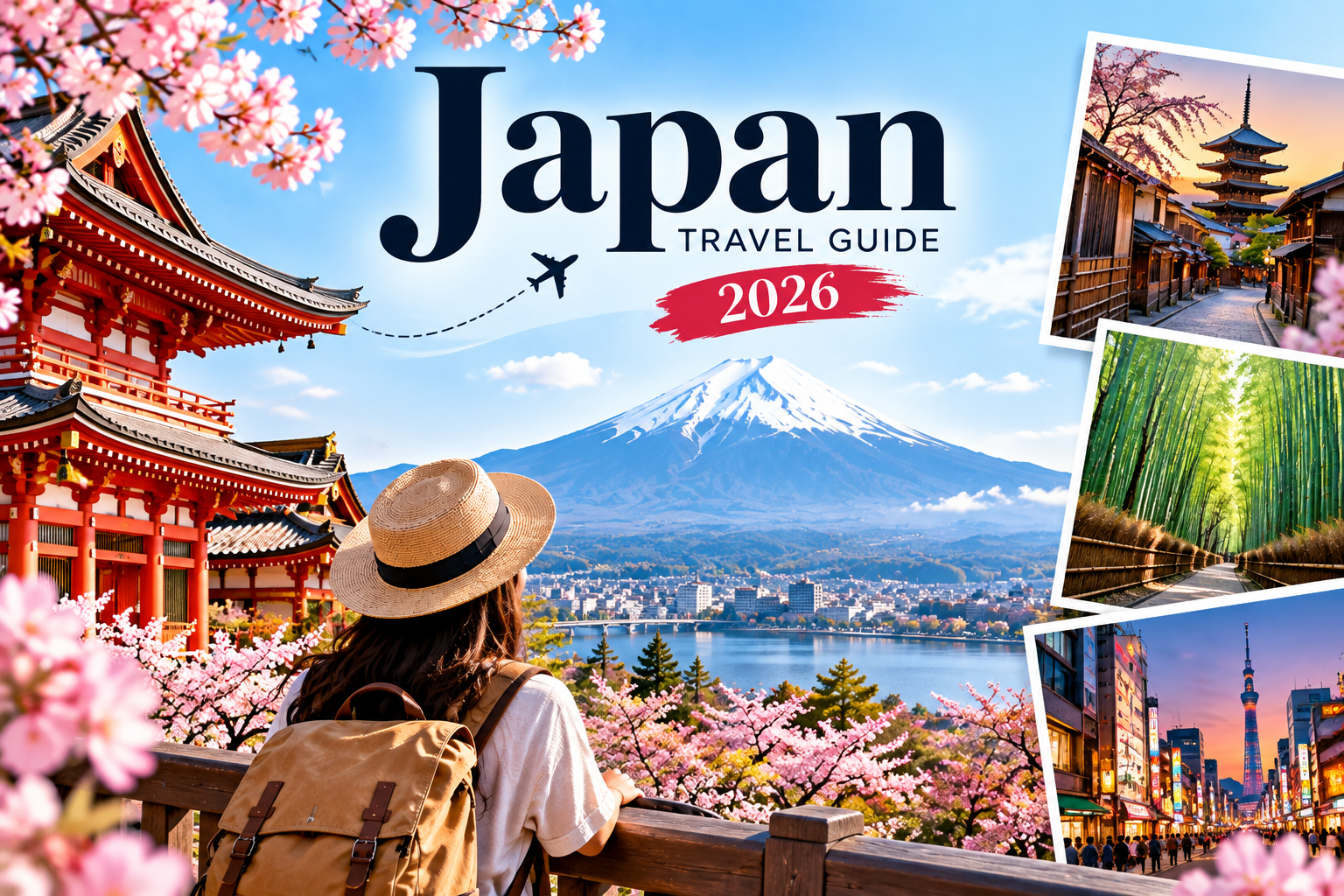
Japan in 2026 offers a mix of ancient temples, futuristic cities, and seasonal beauty that rewards careful planning. The best time to visit is spring (March–May) or autumn (September–November), when cherry blossoms or fall foliage peak. Budget at least ¥15,000–¥25,000 per day for a comfortable trip, and book accommodations early, especially around Tokyo and Kyoto, due to rising tourist demand.
Japan continues to captivate travelers with its blend of tradition and innovation. From the neon-lit streets of Shibuya to the quiet stone paths of Kyoto’s temple gardens, the country offers experiences that feel both timeless and cutting-edge. As international travel rebounds and Japan’s tourism infrastructure expands ahead of 2026, now is an excellent time to start planning your visit.
This guide covers everything you need to know: when to go, where to stay, how to get around, what to eat, and how to navigate the practical details that make or break a trip. Whether you’re visiting for the first time or returning to explore beyond Tokyo and Kyoto, this guide will help you build an itinerary that fits your interests and budget.
We’ll also point you toward official Japanese tourism resources so you can verify details and book with confidence. For deeper dives into specific regions or experiences, check out our related travel guides linked throughout this article.
Table of Contents
When Is the Best Time to Visit Japan in 2026?
Japan’s travel seasons each offer distinct advantages, and choosing the right one depends on what you want from your trip.
What Should You Know About Cherry Blossom Season in Spring?
Cherry blossom season, or sakura, typically runs from late March to early April in Tokyo and Kyoto, though timing varies by region and year. According to the Japan National Tourism Organization (JNTO), bloom forecasts are published each year starting in January, allowing travelers to plan trips around peak viewing windows. Spring is the most popular season for visitors, so expect higher prices and crowded popular viewing spots like Ueno Park and Maruyama Park.
Is Autumn a Better Time to Avoid the Crowds?
Autumn, particularly November, brings vivid red and gold foliage to temples and gardens across the country, especially in Kyoto’s Arashiyama district and Nikko. Autumn tends to be slightly less crowded than cherry blossom season while still offering spectacular scenery, making it a strong choice for travelers who want comparable beauty with more breathing room.
What About Summer and Winter Travel?
Summer (June to August) brings high humidity and the rainy season (tsuyu) in June, but it’s also when Japan hosts vibrant festivals like Gion Matsuri in Kyoto. Winter (December to February) is ideal for travelers interested in skiing in Hokkaido or Nagano, or for those who want to see snow-capped temples with fewer tourists. Choose summer if festivals matter more to you than comfort, and choose winter if you prioritize snow sports or lower accommodation costs.
How Much Does a Trip to Japan Cost in 2026?
Japan has a reputation for being expensive, but costs vary widely depending on travel style.
What Is a Realistic Daily Budget?
Budget travelers can expect to spend around ¥8,000–¥12,000 per day by staying in hostels or capsule hotels, eating at convenience stores and casual restaurants, and relying on local trains. Mid-range travelers should budget ¥15,000–¥25,000 per day for comfortable hotels, a mix of casual and sit-down dining, and regional train travel. Luxury travelers can easily spend ¥40,000 or more per day on high-end ryokan stays, private tours, and fine dining.
How Can You Save Money on Transportation?
The Japan Rail Pass, available for purchase before arrival, offers unlimited travel on JR trains, including most Shinkansen bullet trains, for a fixed price over 7, 14, or 21 days. Note that pricing structures have changed since 2023, so compare the pass cost against your planned itinerary using the official JR Pass calculator to confirm it saves you money. Travelers sticking to one region may find regional passes more cost-effective than the nationwide pass.
Where Should You Stay in Japan for the Best Experience?
Accommodation choice shapes your trip as much as your itinerary does.
Should You Choose a Hotel, Ryokan, or Capsule Hotel?
A traditional ryokan offers tatami-mat rooms, futon bedding, and often an in-house onsen (hot spring bath), making it ideal for travelers who want an authentic cultural experience, particularly in places like Hakone or Kinosaki. Choose a ryokan if immersive cultural experiences matter more to you than modern amenities. Business hotels and Western-style hotels suit travelers who prioritize convenience and familiar comforts, especially in major cities like Tokyo and Osaka. Capsule hotels are a budget-friendly and surprisingly comfortable option for solo travelers or those on tight schedules.
Which Cities Should Anchor Your Itinerary?
Tokyo and Kyoto remain the two most popular bases, but Osaka, Hiroshima, and Fukuoka each offer distinct regional character worth exploring. First-time visitors often benefit from splitting time between Tokyo (modern culture, shopping, technology) and Kyoto (temples, traditional arts, historic districts), with a day trip to Nara or Osaka added in. For a deeper look at building a multi-city itinerary, see our regional Japan itinerary guide (link).
How Do You Get Around Japan Once You Arrive?
Japan’s transportation system is famously efficient, but understanding it before you go makes everything easier.
Is the Shinkansen Worth It for Shorter Trips?
Japan’s Shinkansen bullet trains connect major cities at speeds up to 320 km/h, cutting travel time dramatically compared to regular trains or buses. For trips between cities like Tokyo and Kyoto (roughly 2.5 hours by Shinkansen), the bullet train is almost always worth the cost due to the time saved and onboard comfort.
How Do IC Cards Simplify Local Travel?
Prepaid IC cards like Suica and Pasmo work on nearly all local trains, subways, and buses across major cities, and can even be used for convenience store purchases. These cards eliminate the need to calculate individual fares for every trip, making them essential for navigating cities like Tokyo and Osaka.
What Food Experiences Should Be on Your Japan Itinerary?
Japanese cuisine varies dramatically by region, and trying local specialties is one of the most rewarding parts of any trip.
What Regional Dishes Should You Try Beyond Sushi and Ramen?
Osaka is known as Japan’s “kitchen,” famous for street food like takoyaki (octopus balls) and okonomiyaki (savory pancakes). Hiroshima has its own distinct style of okonomiyaki, layered rather than mixed. Hokkaido offers exceptional seafood and dairy products due to its cooler climate and agricultural industry. Sampling regional specialties, rather than sticking to familiar dishes, gives a fuller picture of Japan’s culinary diversity.
How Should You Navigate Dining Etiquette?
Tipping is not customary in Japan and can sometimes cause confusion if offered. Saying “itadakimasu” before eating and “gochisousama” after finishing a meal are polite customs worth adopting. Many smaller restaurants are cash-only, so carrying yen is important even in cities with widespread digital payment adoption.
What Practical Details Should You Confirm Before You Travel?
A few logistical details can prevent unnecessary stress once you land.
Do You Need a Visa to Visit Japan?
Visa requirements depend on nationality, and many countries, including the United States, United Kingdom, Canada, and most EU nations, can enter Japan for short tourist stays without a visa. Always confirm current requirements through the official Ministry of Foreign Affairs of Japan website (mofa.go.jp) before booking, since policies can change.
How Much Japanese Should You Learn Before Visiting?
Basic Japanese phrases like “sumimasen” (excuse me), “arigatou gozaimasu” (thank you), and “eigo wa hanasemasu ka?” (do you speak English?) go a long way, even though many signs in major tourist areas include English translations. Translation apps and offline Google Translate packs can help bridge communication gaps in less touristy areas.
What Should You Know About Wi-Fi and Connectivity?
Renting a pocket Wi-Fi device or purchasing a Japan-specific SIM card at the airport ensures reliable internet access throughout your trip, which is particularly useful for navigation and translation apps. Many convenience stores and train stations also offer free public Wi-Fi, though coverage can be inconsistent.
Start Planning Your 2026 Japan Trip Today
Japan rewards travelers who plan ahead, particularly when it comes to seasonal timing, accommodation bookings, and transportation passes. Start by deciding which season aligns with your priorities, whether that’s cherry blossoms, autumn foliage, winter snow, or summer festivals. From there, build your itinerary around two or three key regions rather than trying to see everything in one trip.
For official and up-to-date travel information, the Japan National Tourism Organization’s website (japan.travel) remains the most reliable resource for current entry requirements, regional guides, and seasonal forecasts. Pair that with our detailed city-specific guides (link) to build an itinerary that fits your travel style, and you’ll be well on your way to experiencing everything Japan has to offer in 2026.
Frequently Asked Questions
How many days do you need to see Japan’s highlights?
A minimum of 10 to 14 days allows enough time to comfortably explore Tokyo, Kyoto, and one additional region like Osaka or Hiroshima without excessive rushing between destinations.
Is Japan expensive compared to other Asian destinations?
Japan tends to be more expensive than Southeast Asian destinations but comparable to or slightly less expensive than Western European travel, particularly when factoring in food and transportation costs.
What are the main risks or challenges first-time visitors face?
Language barriers outside major cities, navigating complex train systems, and limited cash-only payment options are the most common challenges reported by first-time visitors to Japan.
Are there alternatives to visiting during peak cherry blossom season?
Yes. Autumn foliage season offers comparable scenic beauty with smaller crowds, and winter travel provides lower accommodation costs along with opportunities for skiing and snow-focused experiences.
Who should consider a guided tour versus independent travel?
Travelers unfamiliar with navigating foreign transit systems or who prefer structured itineraries may benefit from a guided tour, while independent travelers comfortable with research and flexibility often find independent travel more affordable and customizable.
